Brake pads are not necessarily universal, different models use different brake pads. Some car models are the same on both sides, but there are also some car models that are different on the left and right. Braking mainly comes from friction, using the friction between brake pads and brake discs (drums), as well as the friction between tires and the ground, to convert the kinetic energy of the vehicle's movement into frictional heat energy and stop the vehicle.
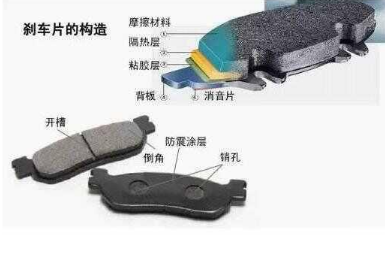
A good and efficient brake system must have good hydraulic transmission and heat dissipation capabilities, provide stable, sufficient, and controllable braking force, and ensure that the force applied by the driver from the brake pedal can be fully and effectively transmitted to the master cylinder and each sub cylinder, and avoid hydraulic failure and brake degradation caused by high heat.
Some vehicles are equipped with brake shoe warning function, and shoes that have reached their limit of use must be replaced. Even if they can still be used for a period of time, it will reduce the braking effect and affect driving safety. Once the wear limit is reached, the instrument panel will sound an alarm prompting the replacement of the shoes.